If you’ve ever tried to buy from a UK store while living in the EU, you already know the experience can feel a little like solving a puzzle with half the pieces missing. One minute you’ve found the perfect jacket, gadget, or home accessory; the next, you’re staring at customs fees, VAT rules, delivery timelines, and return policies that seem to have been written in another language.
The good news? Shopping across the UK-EU divide is still absolutely doable. You just need a smarter approach. Whether you’re hunting for fashion finds, tech deals, beauty staples, or home essentials, this guide walks you through the key things to check before you click “buy”. Think of it as your practical roadmap for avoiding surprises and making better decisions.
Check whether the store ships to your EU country
This sounds obvious, but it’s the first thing worth confirming. Not every UK retailer delivers to every EU destination, and some may only offer shipping to selected countries. A store might accept your order at checkout, only for you to discover later that delivery is unavailable or restricted.
Before you fall in love with an item, check the shipping section of the website carefully. Look for country exclusions, extra handling charges, and whether the retailer uses tracked or untracked delivery. If the shipping information is vague, that’s usually a sign to dig a little deeper. A quick live chat message or email can save you from a frustrating order cancellation later.
Understand customs duties and import taxes
This is the part most shoppers want to skip, but it’s also the part that affects your final price the most. Depending on the value of your order and the type of goods, you may be charged customs duties, import VAT, or both when shopping from a UK-based retailer into the EU.
Some stores collect taxes at checkout, which is ideal because you see the full cost upfront. Others leave you to pay upon arrival, which can lead to an unpleasant surprise. If a pair of trainers seems suspiciously cheap, ask yourself: is that before taxes, shipping, and fees? Because the final bill can change the whole picture.
As a rule, always read the “delivery and taxes” section before ordering. If the store offers Delivered Duty Paid, or DDP, that usually means the seller handles customs charges for you. That’s the easiest route for stress-free shopping.
Compare the total price, not just the product price
One of the biggest mistakes shoppers make is focusing only on the sticker price. A £40 beauty gadget can quickly become less attractive once shipping, taxes, and handling fees are added. The same goes for a “budget” lampshade, a skincare set, or a pair of boots.
Before you buy, build the real cost in your head:
- Product price
- Shipping cost
- Import VAT
- Customs duty, if applicable
- Handling or courier fees
If you’re comparing several UK stores, use the total landed cost rather than the base price. Sometimes the slightly more expensive shop ends up being the better deal because it includes taxes or offers free tracked delivery.
Pay attention to return policies
Returns are where cross-border shopping can become expensive fast. Returning a coat, a tablet, or a set of kitchen tools to the UK from the EU may cost far more than expected. Some stores offer easy returns, but others expect you to cover international shipping yourself.
Before buying, check three things: the return window, who pays return postage, and whether the item must be unopened or unused. For fashion and footwear, size charts and fit notes are crucial. For electronics, make sure the return policy covers faulty items and that warranty terms are clear.
If you’ve ever ordered what looked like “your size” only to receive something fit for a fashion doll, you already know how useful a strong return policy can be.
Look for EU-friendly payment options
Not all payment methods are equally convenient for UK-to-EU shopping. Cards are usually fine, but it’s worth checking whether your bank charges foreign transaction fees. Those small percentages can quietly eat into the value of a good deal.
Some shoppers prefer payment platforms that offer buyer protection or stronger currency conversion transparency. If a retailer supports local payment methods in your country, that’s often a bonus. And if you’re buying from an unfamiliar store, buyer protection matters more than ever. You want reassurance that your money is safe if the item never arrives or doesn’t match the description.
Check sizing carefully, especially for fashion and shoes
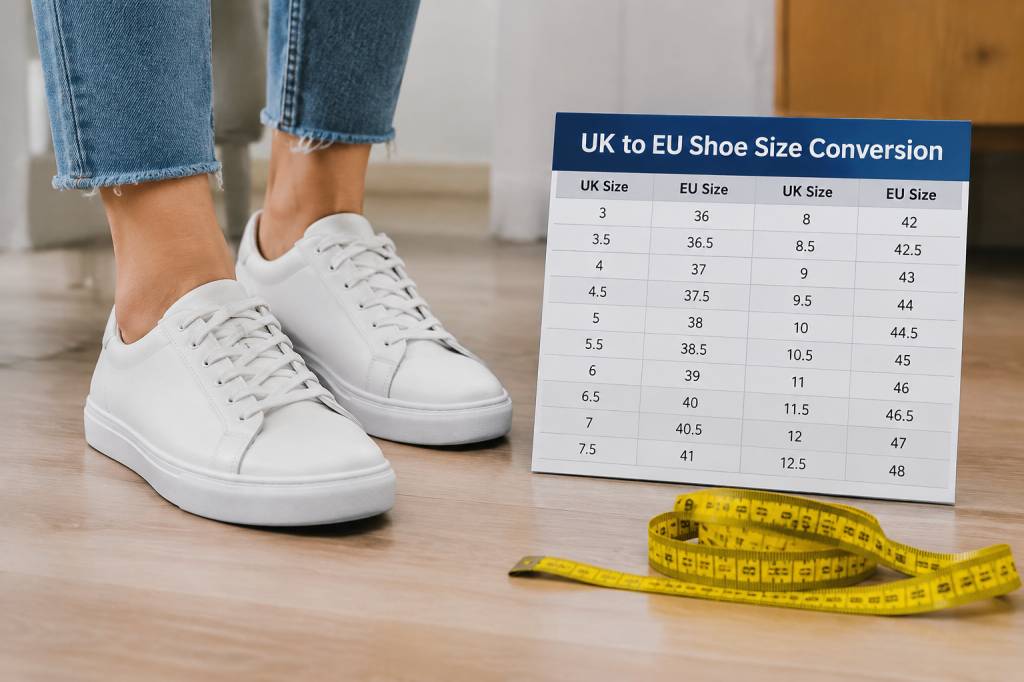
UK and EU sizing differences can be a trap for the unwary. A UK 8 is not the same as an EU 38 in every brand, and shoe sizes can vary even more. If you’re shopping for clothing, accessories, or footwear, always use the retailer’s size guide rather than guessing.
It helps to compare your measurements in centimeters or inches instead of relying on a generic conversion chart. Brands often fit differently depending on the cut, fabric, and country of origin. A blazer, for instance, may run slim in one label and oversized in another. Fashion shopping becomes much easier once you stop trusting the label more than the measurements.
For shoes, check whether the store notes width, arch support, or half sizes. That extra detail can make the difference between a perfect fit and a very expensive regret.
Factor in delivery time before you order
Cross-border shipping is rarely instant. If you need an item for a trip, event, or seasonal change, order earlier than you would with a domestic shop. Customs clearance can add extra days, and delivery times can shift during busy periods like holidays or sales events.
Always check whether the store provides estimated dispatch times and real delivery estimates for your country. If a retailer says “3-5 business days”, ask yourself whether that includes customs processing. Often, it doesn’t. That’s why it’s smarter to give yourself a buffer, especially for gifts, event outfits, or essential home items.
Know when VAT is included and when it isn’t
VAT can be confusing because it may or may not be built into the displayed price depending on the retailer and checkout setup. This is especially important for EU shoppers buying from UK stores, since the final cost can shift depending on how the seller handles tax collection.
Some sites clearly state “VAT included”, while others show a pre-tax price until the final step. If the product page doesn’t make this clear, don’t assume the displayed cost is what you’ll pay. The easiest habit? Check the checkout summary before confirming payment. That’s where hidden surprises tend to appear.
Watch out for warranty and after-sales support
Buying a phone accessory, kitchen appliance, or beauty device from the UK can be perfectly fine, but warranty support is worth checking in advance. If the product turns out to be faulty, will the seller repair it? Replace it? Ask you to post it back to Britain at your own expense?
For electronics and gadgets in particular, after-sales support matters as much as the original price. A slightly cheaper charger or smart device is not a bargain if returning it becomes a mini logistics project. Make sure the seller offers clear contact details, local support where possible, and a fair process for damaged items.
This is one of those boring details that becomes very exciting the moment something goes wrong.
Use trusted retailers and review their reputation
When shopping across borders, reputation matters even more. A polished website is nice, but it doesn’t always tell you how the retailer handles delays, missing parcels, or customs paperwork. Check recent customer reviews, delivery ratings, and refund feedback before ordering.
If possible, shop from well-known retailers or marketplaces with solid buyer protection. For smaller independent shops, look for transparent policies, a working customer service channel, and clear product descriptions. A trustworthy store will answer the practical questions without making you dig through ten pages of fine print.
A useful habit is to search for the store name plus terms like “customs”, “returns”, or “delivery to EU”. Real customer experiences often reveal more than the homepage ever will.
Shop smarter by timing your order
Timing can make a real difference, especially if you’re hunting for fashion sales, seasonal home décor, or tech deals. UK retailers often run promotions that look especially tempting to EU shoppers, but the timing of your purchase can affect both price and delivery experience.
For example, if you’re buying winter boots in peak cold-weather season, shipping delays are more likely. If you’re ordering beauty gifts near the holidays, customs processing may slow things down. On the other hand, off-season shopping can sometimes unlock better discounts and smoother delivery.
That’s the trick: don’t just shop when you see a deal. Shop when the deal actually works for your budget, timeline, and patience level.
Keep a simple checklist before you click buy
When UK-to-EU shopping gets complicated, a checklist keeps things sane. Before paying, ask yourself:
- Does the store ship to my country?
- Are taxes and customs charges included?
- What is the full landed cost?
- How long will delivery take?
- What is the return policy?
- Are size guides or product specs clear?
- Is the payment method secure and fair on fees?
- Does the product include warranty or support?
If you can answer yes to most of these, you’re in a strong position to order with confidence. If several answers are unclear, it’s usually smarter to keep browsing.
Cross-border shopping does not have to feel risky or complicated. Once you know what to look for, shopping from the UK into the EU can be just as satisfying as buying locally, sometimes more so if you’re after unique brands, better stock, or items that are simply harder to find elsewhere. The key is to think beyond the price tag and focus on the full experience: delivery, taxes, returns, and support.
That’s the difference between a decent purchase and a genuinely smart one. And in shopping, smart is always in style.