
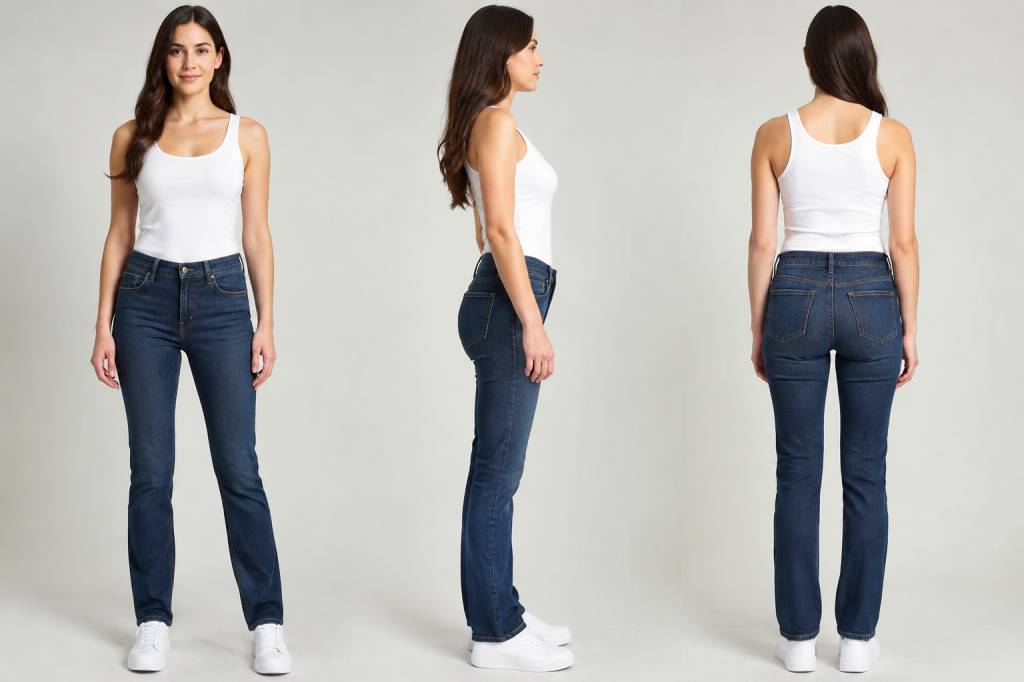
Shopping for jeans or trousers labelled “30 inch waist” sounds straightforward—until one pair fits perfectly and the next feels mysteriously tighter, looser or several inches away from reality. If you have ever ordered your usual size only to discover that the waistband refuses to cooperate, you are not alone.
A 30 inch waist is a useful starting point, but it is not a universal guarantee of fit. Brand sizing, fabric stretch, rise, cut and even where you measure your waist can all change how trousers feel. This practical guide explains what a 30 inch waist means in UK sizing, how it compares with EU measurements, and what to check before buying jeans or trousers online.
What does a 30 inch waist mean?
A 30 inch waist means the waistband is designed for a body measurement of approximately 30 inches, or around 76 centimetres. In men’s jeans and trousers, this is commonly written as W30. You may also see it listed as 30R or 30L, where the first number refers to the waist and the second refers to the inside leg.
For example:
- W30: approximately a 30 inch waist.
- W30 L30: a 30 inch waist with a 30 inch inside leg.
- W30 L32: a 30 inch waist with a 32 inch inside leg.
- 30 inch waist: usually specifies the waist only, with the leg length shown separately or offered as a standard fit.
For women’s jeans, a 30 inch waist is less consistently labelled. Some brands use waist measurements such as W30, while others use UK dress sizes. As a general guide, a 30 inch waist often falls around a UK 12, although it can range from UK 10 to UK 14 depending on the brand, cut and body shape. This is why checking the individual size chart is more reliable than relying on a conversion table alone.
30 inch waist conversion: UK and EU sizing
There is no single conversion system that works perfectly across every retailer. However, the following guide provides a practical starting point for shopping online.
- 30 inch waist in men’s jeans: usually shown as W30 in the UK and often around EU 46.
- 30 inch waist in women’s jeans: commonly around UK 12 and EU 40, but brand variations are significant.
- 30 inches in centimetres: approximately 76 cm.
- 30 inch waist in children’s or unisex clothing: always check the brand’s own measurements, as these categories can use different grading systems.
It is worth treating these figures as a starting point rather than a promise. A men’s straight-leg W30 from one high-street brand may fit differently from a slim-fit W30 from another. Likewise, women’s denim may be cut for a curvier hip-to-waist ratio, a straighter shape or a higher natural waist.
How to measure your waist accurately
The most reliable way to choose a size is to measure yourself and compare the result with the product page. You will need a soft tape measure and a few seconds of patience—two things that can save you from a frustrating return.
- Stand naturally without pulling your stomach in.
- Place the tape around the area where the waistband will sit.
- Keep the tape level all the way around your body.
- Make sure it is comfortably close to the skin, but not tight enough to dig in.
- Take the measurement in inches if the retailer lists inch sizes, or in centimetres if that is the brand’s preferred system.
Do not automatically measure the narrowest part of your torso. High-waisted jeans sit higher than low-rise trousers, so the correct measurement depends on the garment’s rise. If you are shopping for mid-rise or high-rise styles, measure around the position where you expect the waistband to rest.
For the best result, measure at the end of the day or after sitting down for a few minutes. Bodies naturally change slightly throughout the day, and a pair of trousers that fits only when you are standing perfectly still is not a particularly practical purchase.
How to measure jeans or trousers you already own
If you have a pair that fits well, measuring the garment can be even more useful than measuring your body. Lay the trousers flat on a table or bed, fasten the button and smooth out the waistband without stretching it.
Measure straight across the top of the waistband from one side to the other. Double that measurement to estimate the full waistband circumference. For example, a flat measurement of 15 inches equals approximately a 30 inch waistband.
Keep in mind that this method measures the garment, not necessarily the wearer’s exact waist. Jeans with stretch fabric may measure slightly smaller when laid flat but expand comfortably when worn. Rigid denim may measure closer to the labelled size and feel firmer during the first few wears.
You can also compare:
- Front rise: from the crotch seam to the top of the front waistband.
- Inside leg: from the crotch seam down to the hem.
- Leg opening: the width of the hem when laid flat.
- Seat and thigh width: useful when deciding between slim, regular and relaxed cuts.
Choosing the right leg length
A 30 inch waist does not tell you anything about the length of the trousers. This is where the second number in a jeans size becomes important. Common inside-leg options include 28, 30, 32 and 34 inches, although some retailers offer shorter or longer lengths.
As a broad guide:
- L28: often suitable for shorter legs or ankle-length styling.
- L30: a common regular-to-shorter length.
- L32: a popular standard option for many shoppers.
- L34: generally better suited to taller customers or those wanting extra length.
These are not strict height rules. Your preferred break—the way the fabric rests over your shoes—also matters. Slim jeans may look best with little or no stacking, while relaxed and wide-leg trousers can be intentionally longer. If you are between lengths, consider whether the fabric can be altered without affecting the shape of the leg or placement of details such as knee panels and distressing.
Understanding rise and why it changes the fit
Two pairs of trousers can have the same 30 inch waistband measurement but feel completely different because of their rise. The rise is the distance from the crotch seam to the top of the waistband.
- Low-rise: sits lower on the hips and may require a larger measurement than your natural waist.
- Mid-rise: usually sits between the hips and natural waist and offers a versatile everyday fit.
- High-rise: sits closer to the natural waist and may feel more secure, but the waistband position must be measured accurately.
When a waistband feels too tight but the legs fit well, the issue may be the rise rather than the nominal size. Similarly, if the trousers slide down despite the waistband being technically correct, the rise or cut may not suit your proportions.
Stretch denim versus rigid denim
Fabric composition has a major effect on how a 30 inch waist feels in real life. Jeans containing elastane or another stretch fibre can feel snug when first put on and relax as you move. A small amount of stretch is often useful for sitting, commuting and everyday wear.
Rigid denim, usually made from 100% cotton, has less immediate give. It can feel firm at first, particularly around the waist and hips, but often softens with wear. Do not assume that rigid jeans will expand dramatically; they may mould to the body, but they will not always become a full size larger.
Check the fabric information before choosing your size:
- 1–2% elastane: usually provides noticeable comfort and flexibility.
- Low-stretch denim: offers some movement while retaining a structured appearance.
- 100% cotton: gives a firmer, more traditional denim feel.
If you are between sizes, stretch denim can sometimes make the smaller option wearable, while rigid denim may be more comfortable in the larger size. However, the waistband should not gape or require a belt to stay in position.
Men’s fit guide for a 30 inch waist
In men’s jeans and trousers, W30 is commonly considered a small-to-medium waist size, but the overall fit depends on the cut. Slim and skinny styles will feel closer through the thigh and calf, while regular and relaxed styles provide more room.
Consider the following before ordering:
- Slim fit: suitable if you prefer a closer silhouette, but check thigh and calf measurements.
- Straight fit: offers a consistent leg width and is often an easy everyday choice.
- Tapered fit: gives more room around the upper leg before narrowing towards the ankle.
- Relaxed fit: provides additional space through the seat and thigh.
If your waist measures 30 inches but you have larger thighs or a more athletic build, an athletic or relaxed cut may fit better than simply sizing up. Choosing a larger waist can create unwanted room at the back, while selecting a different cut solves the problem more effectively.
Women’s fit guide for a 30 inch waist
Women’s sizing is particularly inconsistent between brands, so a 30 inch waist should be treated as a measurement rather than a fixed dress-size equivalent. A UK 12 may be a useful starting point, but you should also compare hip measurements. Jeans need to fit comfortably across the waist, seat and upper thigh, not just at one point.
For curvier proportions, look for features such as a contoured waistband, a curvy fit or a higher back rise. These details can reduce waistband gaping without making the jeans too tight around the hips.
For straighter proportions, a classic straight-leg or low-stretch style may sit more evenly around the waist and hips. Adjustable waist tabs, side adjusters and a little elastane can also improve day-to-day comfort.
When comparing women’s jeans, pay attention to whether the stated 30 inch measurement refers to the body size the garment is designed for or the actual waistband measurement. Retailers do not always present this information in the same way.
Common fit problems and what they mean
The waistband digs in when sitting: the rise may be too short, the fabric may lack stretch, or the waist measurement may be too small.
The waistband gaps at the back: the cut may not match your waist-to-hip shape. Try a curvy fit, a higher rise or a different brand rather than automatically choosing a smaller size.
The trousers twist around the leg: the cut may be unsuitable, or the garment may have been affected by washing. Check the care instructions and try another leg shape.
The knees bag after a few hours: this can happen with softer stretch denim. A fabric with better recovery, or a slightly more structured fit, may hold its shape more effectively.
The waist fits but the trousers feel tight at the thighs: choose a roomier cut or an athletic fit. Increasing the waist size may create a poor fit elsewhere.
Shopping online for a 30 inch waist
Before adding jeans or trousers to your basket, check the product page for the brand’s size chart, fabric composition, rise and available leg lengths. Customer reviews can also reveal whether the item runs small, true to size or large, although review comments are personal and should support—not replace—the measurements.
- Compare the size chart with your body measurement.
- Check whether the fabric contains stretch.
- Confirm the inside-leg length, not just the waist size.
- Read the fit description carefully: slim, regular, tapered, relaxed or wide leg.
- Review the retailer’s returns policy before ordering multiple sizes.
When in doubt, measure a pair of trousers you already own and compare the flat measurements with the retailer’s details. This simple step often gives a clearer picture than a generic UK-to-EU conversion chart.
Finding your best fit
A 30 inch waist is a helpful reference point, but the right pair of jeans or trousers depends on much more than the number on the label. Measure where the waistband will sit, check the rise, compare the inside leg and consider how much stretch the fabric provides.
If a W30 fits well in one style but not another, that does not mean your measurements have changed overnight. It usually means the cut, fabric or brand sizing is different. Treat the label as a guide, use the product measurements, and choose the shape that allows you to sit, walk and move comfortably. Good fit should make you forget about the waistband entirely—which is exactly what you want from a reliable everyday pair of trousers.